

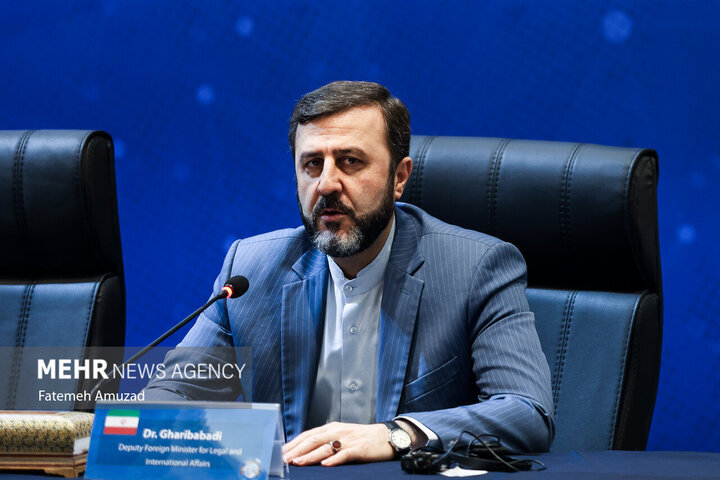
Kazem Gharibabadi, Iran’s Deputy Foreign Minister for Legal and International Affairs, said the 11th Review Conference of the Treaty on the Non-Proliferation of Nuclear Weapons (NPT) concluded without adopting a final document after three weeks of negotiations at the United Nations headquarters in New York — a failure he blamed on what he described as the “excessive demands of Western countries.”
According to local Iranian media, in a post published on X, Gharibabadi said that despite Iran’s peaceful nuclear facilities — which are under IAEA safeguards — having been attacked twice over the past year by the United States and Israel, some Western governments attempted to shift attention away from those incidents and “reverse the roles of aggressor and victim.”
He argued that instead of condemning attacks against Iran’s civilian infrastructure and non-military targets, Western states and the United States sought to include language in the conference’s final document condemning Iran over what they described as “non-compliance with safeguards obligations and UN Security Council resolutions.”
The Iranian deputy foreign minister described those efforts as politically motivated and said Tehran prevented the countries involved from achieving their objectives, ultimately leading the conference to end without consensus on a final declaration.
Gharibabadi also held Western countries responsible for the collapse of the talks, stressing that Iran would continue to oppose what he called the “instrumental misuse of international institutions and documents for political purposes.”
Criticizing what he referred to as “nuclear exceptionalism,” he added: “If the non-proliferation regime is to survive, it must be built on equal security, equal sovereignty, and equal accountability — not nuclear exceptionalism.”
MNA













Your Comment